
What "Colorado Style" Actually Looks Like Right Now (And Where It's Heading)
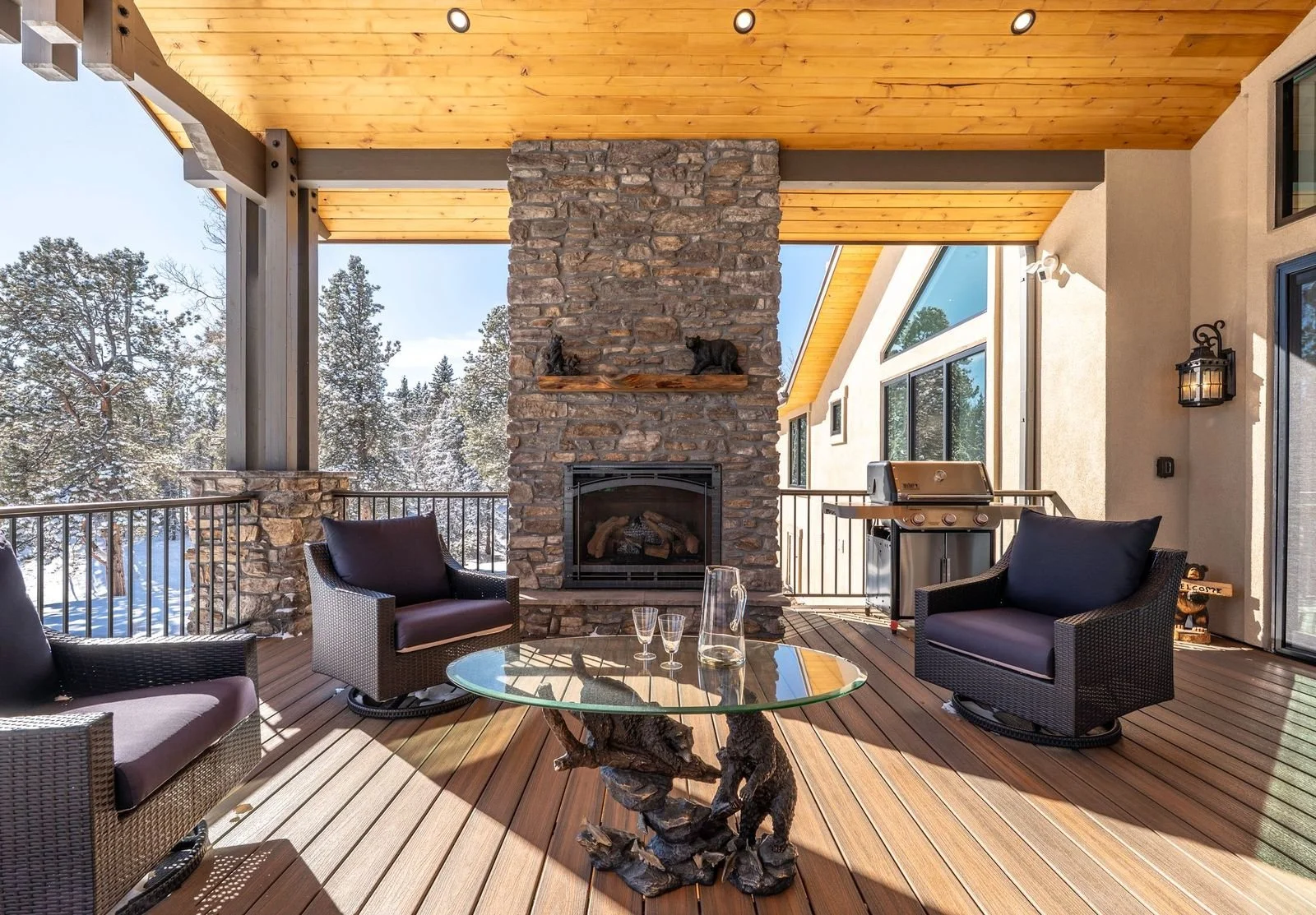
Ask someone to picture a Colorado home, and they'll probably describe something with exposed timber beams, a stone fireplace, and a wraparound porch overlooking a ridgeline.
That image isn't wrong, but it's not the whole picture anymore. Colorado's residential aesthetic is in the middle of a significant shift, and if you're planning to build here, understanding what's changing and what's staying will save you from chasing a look that either doesn't fit the region or doesn't hold up against how Colorado's climate actually behaves.
What Traditional Colorado Style Actually Means
For most of the past two decades, the defining features of a Colorado custom home have been timber and stone. Not necessarily a full log structure — those come with real complications — but the suggestion of timber: heavy framing over the entry, exposed beams in the great room, a covered back deck with timber posts and rafters.
Log homes are beautiful, but in practicality, they're difficult to build, source, and insulate, and doing any electrical or plumbing work in them is a challenge. What most people actually want when they say they want a log home is the warmth and texture of timber, not the structural system. Timber details, whether structural or decorative, deliver that feeling without the headaches.
Stone on the exterior is the other constant. Whether it's a full facade or a detail — a chimney chase, a knee wall, a garden-level base — stone reads as distinctly Colorado. It's also practical: stone weathers well, requires minimal maintenance, and holds up against the temperature cycling that wears through wood-based exterior products far faster than most people expect.
Why Wood Siding Is Fading
Speaking of wood: it's worth understanding why the industry is moving away from it as a primary exterior material in Colorado. In many climates, wood siding is a reasonable, attractive choice that lasts 15 to 20 years before needing significant attention. In Colorado, the math changes considerably.
At elevation, UV exposure is intense. The temperature swings from freezing mornings to 70-degree afternoons, sometimes in the same day. This places stress on exterior finishes in ways that milder climates simply don't. Wood siding in Colorado needs to be sealed in the first year, recoated within three years, and maintained on a five-year cycle after that. Many homeowners don't realize that going in, and the maintenance burden catches them off guard.
The industry response has been a move toward what you might call minimized-maintenance homes: stone, acrylic stucco, fiber cement, and composite materials that hold up against Colorado's climate without constant intervention. It's not that wood siding can't be done here — it can. It just demands more from you as an owner than it does almost anywhere else.
What's Arriving: The Modern West Coast Influence
Over the last several years, a meaningful aesthetic shift has emerged as people relocate from California and other coastal markets. The clean lines, flat or low-pitched roofs, large expanses of glass, and metal accents that define contemporary West Coast residential design are showing up more frequently in Colorado Springs and the surrounding foothills.
It's a compelling look, but it's worth noting that it was developed for a different climate and terrain. Some elements of that aesthetic translate well to Colorado. Others need to be adapted to account for snow loads, freeze-thaw cycles, and the structural demands that come with building at elevation. If a modern, cleaner aesthetic is what you're drawn to, you can absolutely achieve it here — the key is working with a builder who understands which parts of that vision need to be rethought for where you're actually building.
What's Coming Back: Mid-Century Modern
One trend worth paying attention to is the return of mid-century modern design, and it fits Colorado well. The natural use of materials, integration with the surrounding landscape, large windows that bring the outside in, and a clean structural logic that doesn't rely on ornament all translate well to the Colorado setting.
Colorado Springs has a true historical connection to this era: two homes designed by Lloyd Wright (Frank Lloyd Wright's son) still stand here, and that legacy is part of what makes mid-century design feel at home in this region, rather than transplanted. If you're drawn to that aesthetic, now is a good time to explore it — and a builder with an appreciation for that tradition can help you execute it in a way that's authentic, rather than superficial.
Matching Aesthetics to Reality
Whatever direction you're drawn to, the most important question isn't "does this look good?" It's "will this look good in ten years, and will it hold up against what Colorado throws at it?" The aesthetic direction is entirely yours to choose. The expertise about what materials perform, what maintenance looks like over time, and what needs to be adapted for the local climate is what an experienced local builder is there to provide.
The best custom homes in Colorado look intentional — like they were designed for this place specifically, not dropped in from somewhere else. That's not an accident. It comes from understanding the region and designing around it.
Bring Your Vision — We'll Help Make It Work Here
Whether you're drawn to mountain modern, mid-century, or something entirely your own, we can help you figure out what that looks like in Colorado — with materials that will hold up, details that make sense for the climate, and a design process that's built around how you actually want to live.
If you're planning a custom home in El Paso County or the surrounding area, let's start a conversation. We'll help you find the look you want and build it in a way that lasts.