
Where to Spend (and Where to Save) on a Custom Home
Not every dollar is the same.
You work from a total number, try to fit your wish list inside it, and end up making cuts in places that hurt and splurging in places that don't matter — because nobody laid out a clear framework for which decisions actually matter
After decades of building custom homes, here’s where we find to be the best place to spend your money:
The First 10%: Your Land and Site
The first 10% of your investment is your land and everything required to make it buildable. This is where many people underinvest their attention — because once the land is purchased, it feels like a sunk cost, and the excitement of designing a home pulls the focus toward finishes and fixtures.
But where your land is, and what it costs to prepare it, shapes everything that follows. Is there a view you're paying for, and is it worth it to you? How far are you from the things your daily life requires? What will it cost to get power, water, and road access to the property? In Colorado, site improvements — well drilling, septic installation, power connection, driveway construction, clearing, and grading — can add tens or even hundreds of thousands of dollars to a build before a foundation is poured.
Getting clear on those costs early isn't pessimistic. It's how you protect your overall budget and ensure the house you design is actually the one you can build.
The Last 10%: Finishes That Get Seen Every Day
The last 10% is your finishes — the selections that make a home feel like it belongs to the people living in it. This is where most design energy goes, and rightly so. But within that 10%, some choices matter far more than others.
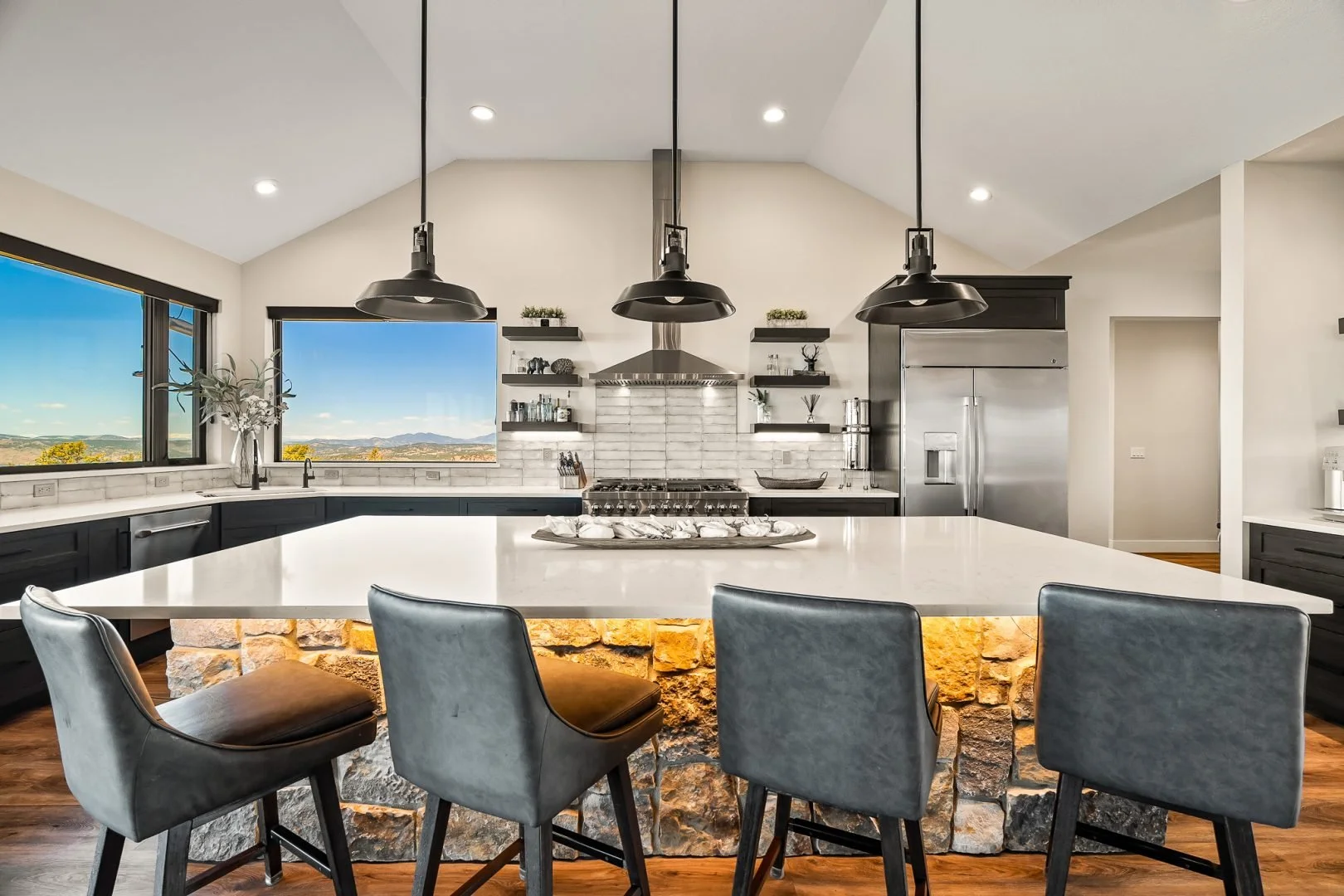
Countertops are the best example. With very few exceptions, anyone who comes to your home ends up in the kitchen at some point in the evening. The countertops are at eye- and hand-level; they're touched constantly, seen constantly, and they read immediately as either beautiful or not. The gap between a great countertop and a mediocre one is obvious to almost anyone who walks into the room. This is where spending the extra money pays off every single day for as long as you live there.
Compare that to an elaborate entry foyer. It photographs beautifully and feels impressive in the design phase — but most people, once they're actually living in a home, enter through the garage. If your family never uses the front door except when guests arrive, a half-million-dollar entry statement is buying you very little daily satisfaction. That money could do a lot more work somewhere else.
The Middle: Structural and Mechanical — Performance Over Luxury
The structural and mechanical middle of a home — framing, windows, doors, roofing, siding, plumbing, electrical — needs to be done right. This is not the place to cut corners on quality. But it's also not the place to chase luxury for its own sake.
Windows and doors are the best example of where this gets complicated. There are products at every price point, with manufacturers making performance claims that can be difficult to evaluate without industry experience. The result is that people sometimes overspend dramatically on windows with features they'll never notice, and underspend on exterior doors that take real abuse from Colorado's weather.
Tile is another one. Hand-glazed tile at $100 per square foot might look virtually indistinguishable from a product available for $1.20 per square foot to anyone without a trained eye. That's a legitimate choice if the detail genuinely matters to you. But it should be a conscious one, made with full information, not the result of a showroom moment where nobody offered a comparison.
The Question Behind Every Selection
The useful question to ask about any finish or feature isn't "do I love this?" — it's "will I still be glad I chose this in five years, and does the price reflect what I'm actually getting?"
A good builder acts as a coach through that process — not to override your preferences, but to make sure you're spending where it shows and pulling back where it doesn't. The goal isn't a cheaper home, it's a smarter one: beautiful where it counts, solid where it needs to be, and free of the expensive regrets that come from decisions made without the full picture.
Build Smarter From the Start
The conversations that save the most money on a custom home happen early — before plans are drawn, before selections are made, before you're emotionally committed to anything. That's when a clear-eyed look at where your budget will have the most impact can actually change the outcome.
If you're in the planning stages of a custom home in El Paso County or the surrounding area, we'd love to have that conversation with you. We'll help you figure out where to invest, where to pull back, and how to build something you'll be proud of without the budget surprises that derail too many custom builds.