
Why Colorado's Climate Changes Everything About How Your Home Gets Built
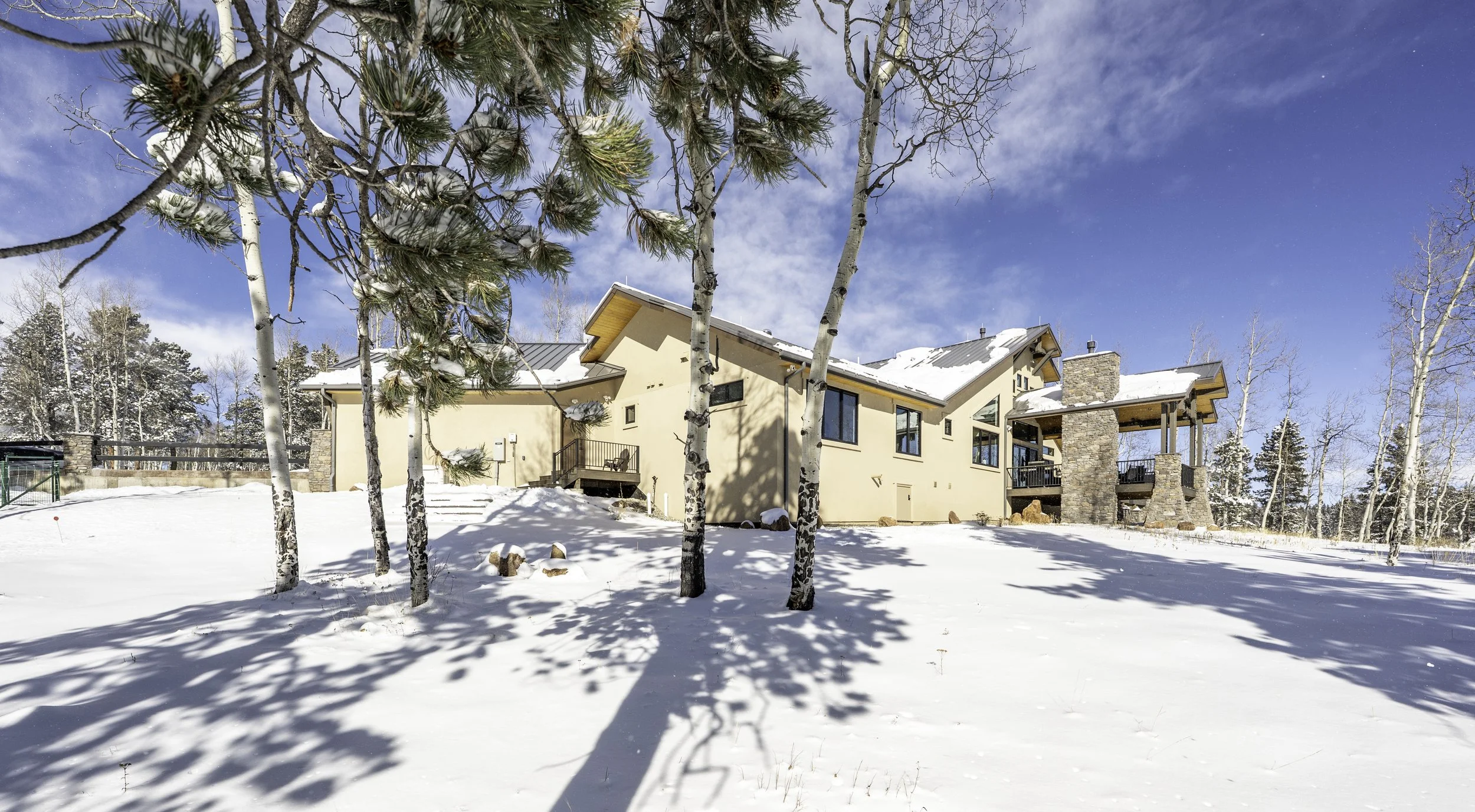
If you've spent time researching how to build a custom home online, a good portion of what you've read probably doesn't apply to Colorado.
Not because it's wrong, but because it was written for somewhere else. The building practices that work in California, Tennessee, or Texas get adjusted, sometimes dramatically, when you're building at elevation with 50-degree temperature swings in a single day and a frost line that can reach eight feet underground.
Understanding how Colorado's climate actually behaves — and how it should shape your build — is one of the most practical advantages you can have going into this process. Here's what doesn't show up in generic home-building guides but will show up in every decision on your project.
The Temperature Swing Problem
Colorado's climate is often described as temperate, but that word undersells how extreme the daily swings can be. It's not uncommon to wake up to 25 degrees and hit 70 by afternoon. In summer, that same dynamic plays out in reverse — cool mornings and intense midday heat, especially in rooms with south-facing windows.
That variance has ripple effects throughout a build. Take composite decking: it needs to be installed differently in the morning than it does by noon, because the boards expand as temperatures rise. Leave the same gap between joints all day, and they'll look uneven by the time the seasons change. The same principle applies to stucco, stone grout, exterior trim, and a long list of other materials that most guides treat as interchangeable, regardless of where you're building.
Traditional sand-based stucco — common and durable in places like Pueblo, 50 miles south of Colorado Springs — tends to crack under the expansion and contraction cycles at higher elevations. Acrylic stucco, which flexes differently, performs better here. These aren't luxury upgrades. They're the right material choices for the climate you're actually in.
Snow Load and Foundation Engineering
Your home in Colorado has to carry more weight than homes in most of the country, which shapes how it gets engineered from the ground up. Snow load requirements influence structural design, beam sizing, and roof pitch in ways that simply aren't factors in warmer or drier climates.
One current example worth knowing about: the barndominium trend. Steel-frame, open-concept buildings have become popular everywhere, and in many environments they're a smart, efficient choice. In Colorado, they're difficult to execute well. The foundation systems required here are different from those in milder climates, and the steel itself creates a thermal bridging problem — touch the drywall next to a steel girder on a February morning, and it'll be cold to the touch. In a climate where even summer nights regularly dip to 45 or 50 degrees, that's not a minor comfort issue. It's a building science problem that adds significant cost and complexity to insulation.
Your Heating System Might Not Work at Elevation
Here's one that surprises a lot of people relocating from California or the Pacific Northwest: the mini-split systems that are efficient, cost-effective, and nearly universal in milder climates stop working well above about 6,500 feet.
Mini-splits use heat pump technology to both cool and heat a home. The cooling function works fine at elevation. The heat pump side, however, struggles to keep up in sustained cold — the kind Colorado gets for weeks at a time in February. Above 6,500 to 7,000 feet, relying on a heat pump as your primary heating source is an easy mistake to make and expensive to correct.
Altitude also affects how propane burns — less efficiently than natural gas, which isn't always available in rural areas. That affects cooking performance, water heating, and how you size your mechanical systems. In tight, well-insulated homes — which is exactly what Colorado's climate demands — fresh air intake becomes a code requirement, handled by heat recovery ventilation units that add upfront cost but make the home livable year-round.
Insulation Values Beyond Code
Colorado's energy code already requires more insulation than many other states, because the climate demands it. But meeting minimum code and building a home that actually performs are two different things. In a climate that swings between 100-degree summer afternoons and multi-week cold snaps in winter, how well the envelope of your home holds conditioned air determines not only your energy bills, but also how comfortable the house feels day to day.
The details that matter most — air sealing, thermal bridging at framing members, window placement relative to solar gain — aren't always the details that show up in a standard spec sheet. They require a builder who's paying attention to performance, not just code compliance.
The Vent Hood Nobody Warned You About
One example that comes up often illustrates how Colorado-specific knowledge plays out in real decisions. A high-end range hood — the dramatic, statement-piece kind that anchors a kitchen — sounds like a straightforward selection. In Colorado, it isn't. A powerful vent hood pulls significant air volume out of the home. In a tight, well-insulated envelope, that creates negative pressure, which means you need makeup air systems to compensate. That $5,000 vent hood suddenly has mechanical implications that can push the true cost to $15,000 or more once everything is properly accounted for.
The builders who know this tell you upfront, before you've ordered anything. The ones who don't figure it out on the back end — and you pay for it either way.
What This Means for You
Building in Colorado isn't harder than building elsewhere — it just requires a builder who genuinely knows the local variables and designs around them from day one. Before you sign with anyone, ask them what's different about building in Colorado versus somewhere else. Ask them what they've changed about how they build because of the climate. Their answer will tell you a lot about whether you're getting someone who's adapted to this place or someone who's applying a generic approach and hoping for the best.
Let's Talk About Your Specific Site
Every lot in Colorado presents its own set of climate and terrain challenges. Before we talk floor plans, we want to understand your land — its elevation, its orientation, its exposure — because all of those factors shape how your home should be built, not just what it looks like.
If you're planning to build in El Paso County or the surrounding area, get in touch. We'll give you a straight answer about what building on your site actually involves — before you're committed to anything.